Navigating the OPM Federal Retirement Process Step by Step
Navigating the OPM Federal Retirement Process Step by Step
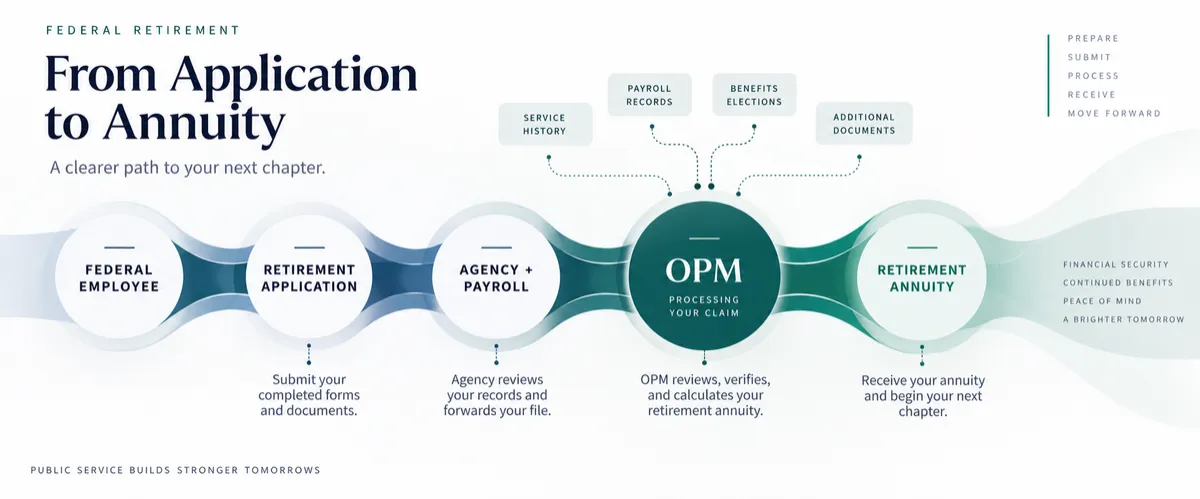
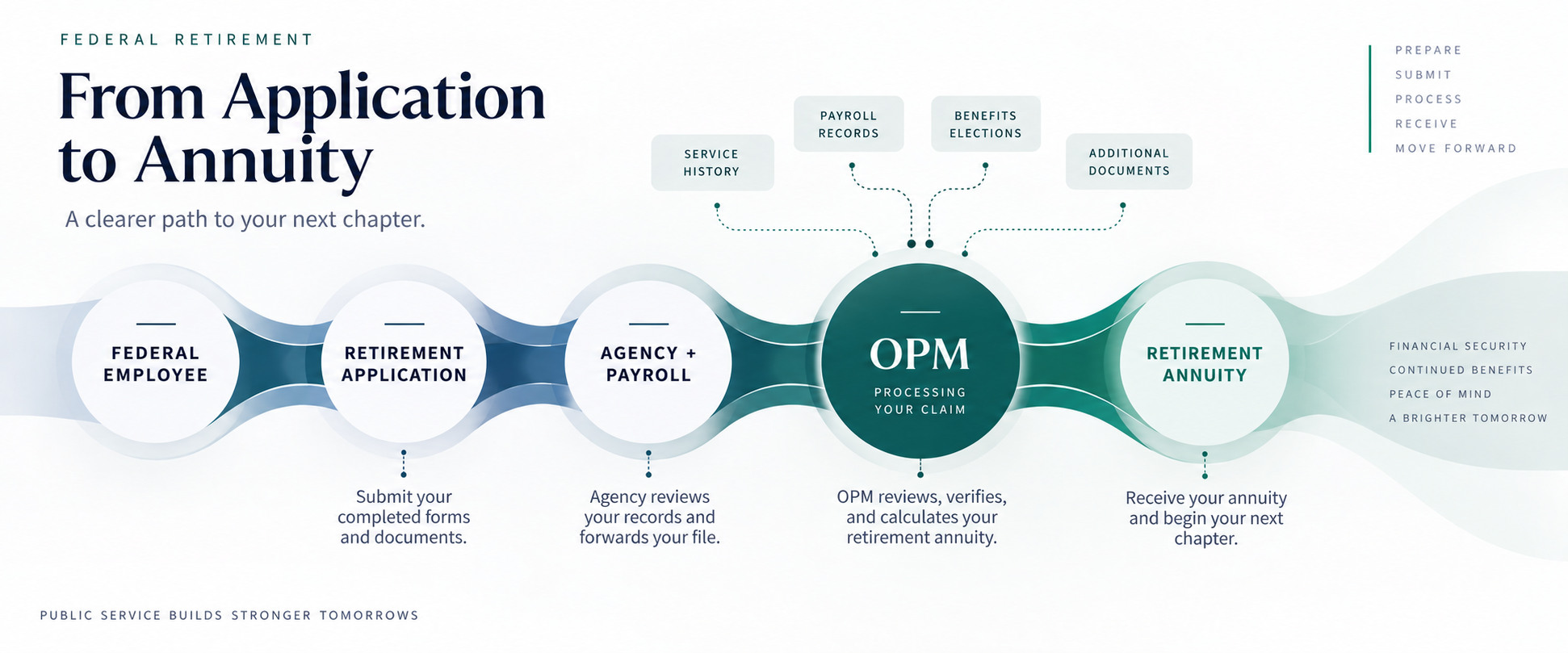
For most federal employees, retirement is the milestone they look forward to after decades of public service. However, as your retirement date approaches, you quickly realize that transitioning from federal employee to OPM retiree involves a complex administrative process. The Office of Personnel Management (OPM) handles tens of thousands of retirement claims each year, and knowing how your application moves through the pipeline can save you months of anxiety and financial stress.
My name is Zina Smith, founder of Cross Point Solutions in Columbia, Maryland. As a former federal employee and licensed insurance professional, I have sat on both sides of the desk. I understand how overwhelming the transition can feel when you are moving from a steady biweekly paycheck to retirement annuity payments. This guide breaks down the exact OPM retirement process, timeline, and common pitfalls so you can retire stress-free with confidence.
Stage 1: Pre-Retirement Preparation and Application (6 to 12 Months Before Retirement)
Your OPM retirement journey begins long before your actual separation date. The choices you make on your retirement application are permanent once OPM processes your claim, so thorough preparation is essential.
Gather Your Official Documentation
Start by requesting a certified copy of your official personnel folder (OPF) summary and service computation date (SCD) for retirement. Verify that all of your federal service is accurately documented, including any part-time work, temporary service, or military service buyback credits.
Complete Standard Form 2801 (SF 2801)
If you are retiring under the Federal Employees Retirement System (FERS), your primary document is Standard Form 2801, Application for Immediate Retirement. Under FERS, you will select your survivor benefit options, elect whether to continue Federal Employees Health Benefits (FEHB) and Federal Employees Group Life Insurance (FEGLI), and specify tax withholding elections.
• Survivor Benefit Elections: Choosing a full (50%) or partial (25%) survivor benefit for your spouse ensures they continue receiving a portion of your annuity and remain eligible for FEHB if you pass away first.
• FEHB 5-Year Rule: To carry health insurance into retirement, you must have been continuously enrolled in FEHB for the 5 years of service immediately preceding your retirement date.
• Military Service Buyback: If you performed military service, ensure your deposit was completed and paid in full before your retirement date to receive FERS pension credit.
To evaluate your overall retirement readiness before submitting your paperwork, download our Free Federal Retirement Checklist.
Stage 2: Agency Human Resources and Payroll Processing (Month 0 to Month 1)
Submitting your SF-2801 to your agency HR department is step one. Your agency must complete several internal audits before your file leaves for OPM.
Agency HR Review
Your servicing HR specialist reviews your application, confirms your eligibility based on age and creditable service, and verifies your High-3 average salary calculations. HR compiles your retirement package, attaching certified copies of your SF-50 history, health insurance enrollment records, and military deposit receipts.
Payroll Clearance and Separation SF-50
After your final day of work, payroll issues your final agency paycheck, calculates unused annual leave lump-sum payouts, and generates your final separation SF-50. Payroll then certifies your records and forwards your complete package to OPM. This agency phase usually takes 30 to 45 days after your separation date.
Stage 3: Arrival at OPM Boyers and Interim Pay Status (Months 1 to 3)
Once OPM receives your complete file from your agency payroll office, your claim is assigned a Civil Service Annuitant (CSA) number. You will receive a welcome letter in the mail containing your CSA number and instructions for setting up your OPM online account.
How Interim Pay Works
While OPM adjudicates your retirement package, they place you on "interim pay status." Interim pay is a temporary, reduced monthly payment designed to provide cash flow while OPM specialists verify every detail of your service record.
Interim payments are typically 60% to 80% of your estimated net monthly pension. OPM intentionally keeps interim payments conservative to prevent overpayments that would have to be clawed back later. During interim status:
• Federal and state taxes are withheld at default rates or flat estimates.
• FEHB and FEGLI premium deductions are temporarily paused (coverage remains active).
• The FERS Annuity Supplement, if applicable, is usually not paid until final adjudication.
Because interim pay is lower than your full pension, having a 3-to-6-month cash buffer in your bank account ensures your monthly bills are paid comfortably during this transition.
Stage 4: Final Adjudication and Retroactive Adjustment (Months 3 to 6)
During final adjudication, an OPM legal administrative specialist reviews your entire service history line by line. They calculate your exact High-3 average salary, total creditable service years and months, survivor benefits, and FEHB/FEGLI deductions.
The Final Settlement Paycheck
Once adjudication is complete, OPM transitions you to full annuity pay status. OPM calculates the difference between what you received in interim pay and what you were actually owed, issuing a lump-sum retroactive payment directly to your bank account. Regular monthly health insurance and life insurance premiums resume automatically.
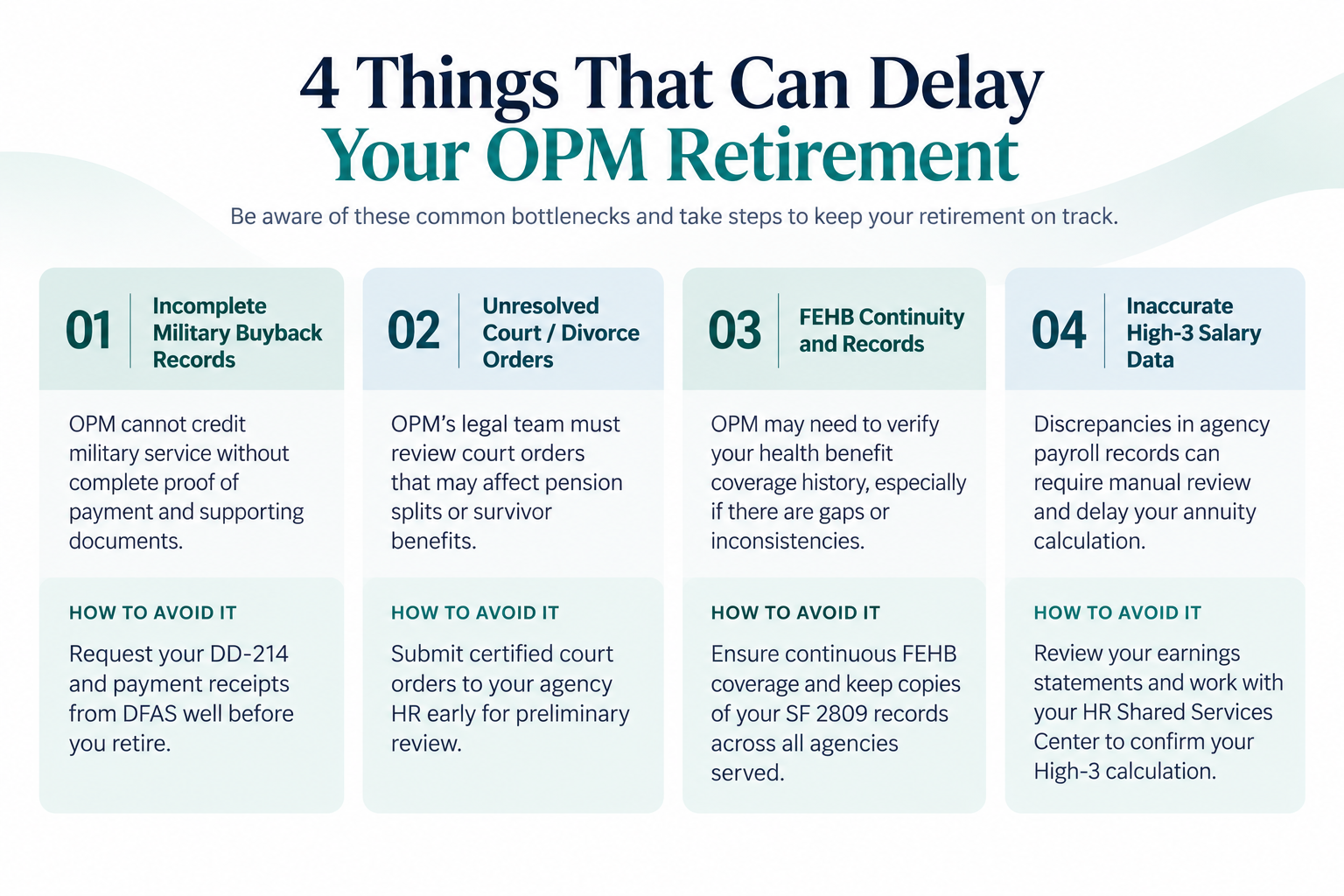
Common OPM Processing Delays and How to Avoid Them
While standard OPM processing takes between 60 and 90 days after receiving your file, administrative bottlenecks can extend processing beyond 6 months. Here are the most frequent causes of delay and how to prevent them:
Integrating OPM Pension with TSP and Personal Savings
Your OPM annuity is one pillar of a secure federal retirement. For a comprehensive financial foundation, your FERS pension works alongside your Thrift Savings Plan (TSP) and personal investments.
Many federal employees choose to evaluate their overall retirement portfolio, including moving TSP funds or existing 401(k) accounts into guaranteed growth vehicles once they retire. You can learn more about managing retirement account transitions in our comprehensive guide on FERS Retirement Planning and our article on 401(k) and TSP Rollover Options.
Key Takeaways for a Smooth OPM Transition
• Start Early: Begin organizing paperwork and auditing your OPF 12 months before your target date.
• Plan for Interim Pay: Build a liquid emergency reserve to bridge the gap while receiving 60% to 80% interim annuity payments.
• Keep Copies of Everything: Maintain duplicate copies of your signed SF 2801, SF 2809, and agency transmittal receipts.
• Monitor Your OPM Portal: Use your assigned CSA number to track your claim status on OPM Services Online.
Get Personalized Guidance for Your Federal Retirement
Retirement paperwork should not stand between you and your peace of mind. At Cross Point Solutions, we help federal employees and families in Maryland and across the country align their pension benefits, TSP allocations, and personal retirement strategies without high pressure or complicated jargon.
Ready to build a clear, step-by-step roadmap for your federal retirement? Schedule your complimentary 1-on-1 consultation today by visiting our Cross Point Solutions Appointment Page. We will review your timelines, income streams, and protection options together.
Disclaimer: This article is provided for educational purposes only and does not constitute financial, tax, or legal advice. Federal retirement rules and regulations are subject to change. Consult with a qualified financial advisor, CPA, or your agency HR representative regarding your specific personal situation.
For a plain-English walkthrough of your timeline before you file, book a conversation: https://crosspointsolutions.net/appointment
Also see our FERS guide on the blog: https://crosspointsolutions.net/blog